
Today's briefing:
The Hormuz coalition that isn't: what allied refusal means for your clients and their supply chains
Same day, two attacks: what March 12 tells us about the domestic terror picture
Five million UK directors had their home addresses exposed for five months
Welcome to your Tuesday briefing.
The Strait of Hormuz has been functionally closed since March 2. Oil is above $100 a barrel. Trump asked allies to send warships. Japan said no. Australia said no. The UK said it’s not a NATO mission… so, also no. And the Islamic Revolutionary Guard Corps (IRGC), now effectively running Iran after Mojtaba Khamenei was reported wounded, has made clear it views the blockade as its strongest card and has no plans to fold it.
The war is still kinetic. But the impact on most operations right now is economic, logistical, and diplomatic.
Don’t have time to read? Watch 👇

TOP STORY
Strait talk: the coalition nobody showed up to

Iran's strategy does not require outright control of the Strait. Coastal missile batteries and drone swarms have imposed enough risk that war-risk insurance for the waterway was pulled on March 5. Without insurance, commercial operators cannot transit legally or economically. Traffic through the Strait is down 70%. As of March 12, Iran had conducted 21 confirmed attacks on merchant vessels, including the sinking of a tugboat and the abandonment of six ships.
When Trump called for a Hormuz Coalition and named China, France, Japan, South Korea, and the UK as countries that should send warships to protect their own energy, the expectation was at least a partial response. Japan's prime minister said they are not considering maritime security operations. Australia formally ruled out sending vessels. UK Prime Minister Keir Starmer said it would not be a NATO mission. The model where the US provides the naval umbrella and allies nominally follow has not held.

The practical consequence of that is already visible. Individual nations are expected to begin negotiating private safe-passage agreements with Iran. Once that starts, freedom of navigation, as a universal guarantee, becomes more of a transactional arrangement. That is a significant shift for anyone whose operations depend on predictable sea lanes.
There is an additional layer that has received less attention. Gulf states have deployed GPS jamming to counter Iranian drones, and it has scrambled navigation systems across more than 1,100 commercial vessels operating in the region. Automatic Identification System (AIS) signals have become unreliable. Ships are being rerouted through alternatives like the Mozambique Channel, where piracy is rising again. For maritime security teams, backup navigation is no longer optional.
The International Energy Agency has released around 400 million barrels from strategic reserves to stabilise markets. That covers roughly four months.
Our take:
The allied refusal to join the Hormuz Coalition is the most significant development this week, not because of what it means for the war, but because of what it signals for global security architecture. The post-war model assumed American willingness to lead and allied willingness to follow. Neither assumption is holding right now.
Supply chain assumptions built around open sea lanes need to be stress-tested now. The four-month strategic reserve window is a clock, not a buffer. If your clients have Gulf energy exposure, Gulf-origin food import dependencies, or operations in Kuwait, Bahrain, or Qatar, the risk picture has changed significantly.
BREAKING: Ali Larijani Killed in Israeli Airstrike
Israel claims it has assassinated Ali Larijani, one of the most senior figures in the Iranian regime, in an airstrike targeting an apartment where he was present with his son. Israel's Defence Minister Israel Katz confirmed the strike, describing Larijani as "eliminated" as part of a continued effort to target Iranian leadership. Iran has not confirmed his death at time of publication.
READER POLL
Who bears the most responsibility for keeping the Strait of Hormuz open?
This week’s briefing is brought to you in partnership with…

Most adults with ADHD don't realize how deeply it affects their daily life—from emotional regulation to working memory. This free personalized quiz reveals your ADHD trait score across 5 key areas and shows you exactly where to focus first. Takes 10 minutes, changes everything.
MEANWHILE
Supervised and Dangerous

March 12 produced two attacks connected, in different ways, to the wider conflict.
In Norfolk, Virginia, Mohamed Bailor Jalloh walked into a classroom at Old Dominion University and opened fire, killing Lt. Col. Brandon Shah and wounding two others before being subdued and killed by ROTC students in the room. Jalloh had been convicted in 2017 for providing material support to ISIS. He received an 11-year sentence and was released roughly two and a half years early in December 2024 after completing a drug treatment programme, despite terrorism-related offenders typically being ineligible for that benefit. At the time of the attack, he was on supervised release and enrolled at the university.
The same morning, in West Bloomfield, Michigan, Ayman Mohamad Ghazali drove a vehicle loaded with chemical agents and a rifle through the bollard perimeter at Temple Israel, ramming the front doors. His brother was reportedly a Hezbollah commander killed in a recent Israeli airstrike. The synagogue's private security personnel shot and killed him as he attempted to drive toward an early childhood centre housing 140 children and staff.
The Michigan response worked because armed, trained personnel were on site and had received FBI preparedness training six weeks earlier. The vehicle still navigated around the bollards before impact, which points to a gap in any fixed-site protection plan where diagonal approach angles have not been recently assessed.
The ODU case raises a different question. Supervised release for a convicted terrorism offender does not equal de-radicalisation. Security managers at universities, government campuses, or institutions housing military-affiliated personnel should not assume the judicial system's risk assessment aligns with their own.
A security vulnerability at Companies House WebFiling, live since October 2025, allowed any logged-in user to access another company's private dashboard with nothing more than a browser back button. Private residential addresses, personal email addresses, and dates of birth for approximately five million UK company directors were exposed for around five months. The flaw also enabled company hijacking, where an attacker could change director details or file fraudulent accounts.
Companies House shut down the service on March 13 and confirmed the breach on March 16. The official line is that access was limited to logged-in users rather than the general public. That is a narrow reassurance. Anyone with a valid Companies House login had a five-month window.
For any principal who holds a UK directorship, the working assumption should be that their home address is now in circulation. A residential security review and a move to a registered agent address for future corporate filings are the immediate practical steps.
Sound even smarter:
The IRGC is currently making all military decisions in Iran following reports that Mojtaba Khamenei was wounded. The IRGC has stated explicitly that it believes losing control of the Strait of Hormuz means losing the war. That framing makes negotiated off-ramps significantly harder to reach, because the party in charge has already defined what giving ground looks like.
Iran's blockade does not require naval dominance to work. By using drone swarms and coastal missiles to make war-risk insurance unviable, Iran closed a globally critical waterway without fighting a conventional naval battle. That distinction matters for how the situation ends, since there is no naval defeat to negotiate around.

SNAPSHOTS
🇬🇧 UNITED KINGDOM -- The Home Secretary banned the Al-Quds Day march in London on March 15 for the first time since 2012, citing the risk of serious public disorder. Around 1,000 officers were deployed to manage static protests on both sides of the Thames, with 12 arrests and Lambeth Bridge closed for the duration. Teams with principals in the Lambeth or Millbank areas should factor bridge closures and elevated police presence into movement planning on future protest dates.
🇱🇧 LEBANON -- Israel confirmed ground operations south of the Litani River on March 15, targeting Hezbollah military infrastructure. Fifty-three villages received simultaneous evacuation warnings. Hezbollah responded with 43 attacks on northern Israel in a single 24-hour period, the highest rate of the conflict so far. Anyone with staff, principals, or clients in southern Lebanon or northern Israel should be in active evacuation planning, not monitoring mode.
🇫🇷 FRANCE -- Three men posing as police officers forced their way into a home near Versailles on March 9 and coerced the male occupant at knifepoint into transferring roughly €900,000 in Bitcoin. The attackers wore face coverings and used the appearance of a legitimate law enforcement visit to gain entry. France recorded 19 similar crypto-targeting home invasions in 2025 alone. The takeaway for residential security is straightforward: any individual claiming law enforcement authority at a private address should be verified via an independent call to the relevant precinct before access is granted, regardless of how convincing the presentation is.
🇧🇷 BRAZIL -- A new Android trojan called PixRevolution is targeting Brazil's instant payment system, used by 76% of the population. Unlike automated fraud, this malware puts a live operator on the other end who monitors the victim's screen in real time, swapping payment recipient details while displaying a fake loading screen. For principals or staff conducting financial transactions in Brazil on Android devices, the risk of a high-value transfer being silently redirected is now significant enough to warrant dedicated, hardened devices for any payments above a set threshold.
EXTRA INSIGHT
URBAN OPERATIONS – A large gathering of juveniles in downtown St. Louis on March 13 turned volatile when the crowd refused to disperse despite police PA orders, and a 14-year-old girl was shot within the crowd. The incident is a useful reminder that the point of maximum risk in crowd situations is often dispersal, not the gathering itself. Private security teams managing hospitality or retail assets in US urban centres should maintain a cold-standby extraction option during large evening events and avoid direct confrontation with large groups in favour of high-visibility deterrent positioning.
VENUE SECURITY – Martyn's Law is moving toward a 2027 enforcement date, requiring venues over 800-person capacity to complete formal vulnerability assessments and put physical security measures in place. The preparation window is shorter than the headline date suggests. If you have clients operating large venues, the conversation about compliance should be happening now.
RECOMMENDED READING
The Threat Posed by Fixated Individuals
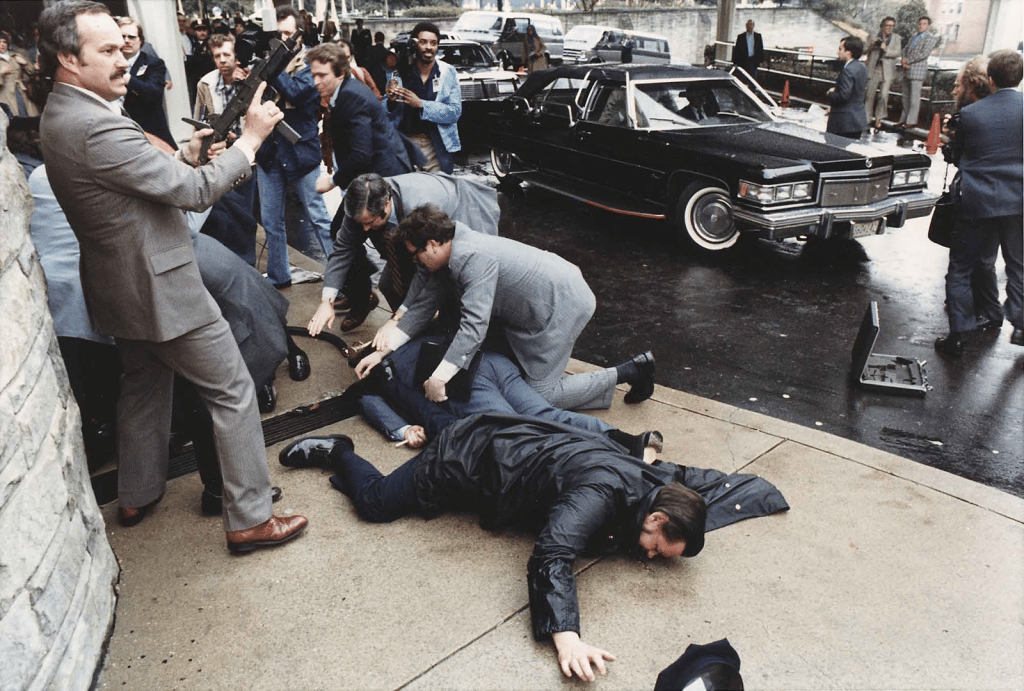
A woman flew from Spain to the UK, arrived at Royal Lodge days after Prince Philip's funeral, convinced security to pay her taxi fare, wandered the gardens for 20 minutes, and walked into Prince Andrew's home. She believed she was engaged to him.
Research suggests fixated individuals pose a greater statistical risk to high-profile targets than terrorists or criminals. Yet the security industry's understanding of how to identify, manage, and respond to them remains patchy at best.
Philip Grindell's piece covers the behavioural indicators most teams miss, why increasing security in response to social media threats is usually the wrong call, and what the Sirhan Kennedy assassination and the Reagan attack have in common with cases happening today.
PREVIOUS POLL - RESULTS
Q: Trump says the Iran war is "pretty much over." How does that change your operational posture?
🟩🟩🟩🟩🟩🟩 A. It doesn't — we follow the threat picture, not the political signal (66%)
🟨⬜️⬜️⬜️⬜️⬜️ B. It creates internal pressure we'll have to push back against (14%)
🟨⬜️⬜️⬜️⬜️⬜️ C. It's close enough to over that we're already planning the return (10%)
🟨⬜️⬜️⬜️⬜️⬜️ D. More complicated than any of these → reply and tell us (10%)
Your Comments:
RF: “We can't let those who have no idea what they are doing control what we do.”
DB: “We now have the risk of insurgent attacks across the area and the areas where help has been provided to the US, on top of everything else. This is not even the beginning.”
CT: “Just read the email and you wrote a lot about Iran and the shooter in Austin TX (I live in TX) and you follow other media outlets in that you mention global conflict or possible terrorism but conveniently peace out Radical Islam, why is that?”
On the Circuit: Our reporting focuses on identifying specific operational threats and geopolitical drivers regardless of ideology, though we appreciate the feedback and aim to ensure our coverage remains as comprehensive as possible for our readers.
***
A closed strait, a fractured alliance, two domestic attacks, and five million home addresses in the wrong hands. It has been that kind of fortnight.
See you next week.
– On The Circuit
If you found this useful, forward it to someone who needs to read it. If someone forwarded this to you, subscribe at https://archives.circuit-magazine.com/
To give or receive feedback, hit reply.